For example Salmonella typhimurium has the ability to destroy intestinal cells and cause severe diarrhea. The bacteria enters into the bloodstream through the ear throat sinuses etc.

What Is Bacteria Good Vs Bad Benefits And Common Types
Infections can also occur in open.
. Bacterial infections in the body are caused when harmful bacteria multiply quickly in the body. Bacteria can also enter your body through your airway and cause infections like bacterial pneumonia. These are also known as systemic infections.
But infectious bacteria can make you ill. Substances produced by the bacterial cell sometimes simply as a by-product of its normal metabolism which interact negatively with our body by interfering with the normal functioning. The body usually has a.
Specifically an intraphagocytic pathogen can alter the way in which the immune system works. They reproduce quickly in your body. Harmful bacteria can also release toxins into the body.
It can survive on its own inside or outside the body. Antibiotics are the usual treatment. Enterococcus faecium is responsible for neonatal meningitis.
If you consume or come in contact with harmful bacteria they may reproduce in your body and release toxins that can damage your bodys tissues and make you feel ill. Many give off chemicals called toxins which can damage tissue and make you sick. This bacteria coexists in the human intestines but also can turn into a damaging agent.
Since bacteria are able to reproduce quickly it is important to seek early treatment. Strep throat Tuberculosis Urinary tract infections Viruses Viruses are much smaller than cells. Bacterial infections are associated with diseases such as strep throat tuberculosis staph skin infections and urinary tract and bloodstream infections.
Trichinella spiralis the parasitic worm helminth that causes trichinosis enters the body encased in cysts residing in undercooked meat. Antibodies produced by the immune system attach to the bacteria and help in their destruction. Signs of leaking bacteria include.
Pain and tenderness in the stomach. Some bacteria destroy the cells as they feed on the cellular content. 1They cause food borne illnesses.
The pathogenicity of invasive bacteria or their ability to cause disease is generally the result of toxins. Periodontitis bad breath sore or bleeding gums or gum or cheek inflammation. The usual culprits are Escherichia coli E.
This is an infection that causes headaches a stiff neck fever and photophobia. Symptoms Stiff neck fever headache muscle pain light sensitivity confusion rashes nausea etc Causes Neisseria meningitidis Listeria monocytogenes Streptococcus pneumoniae. Bacterial infections can affect the throat lungs skin bowel and many others parts of the body.
Bacteria are generally less tissue-specific and non-discriminatory than viruses and can make a range of infections after they have invaded the host. Bacteria can be harmful but some species of bacteria are needed to keep us healthy. In fact we have many bacteria on and inside our body especially in the gut to help digest food.
They cause infections of the GI track. Infections brought on by harmful bacteria can nearly always be cured with antibiotics. 2They cause Waterborne diseases.
But some bacteria can cause infections. Bacteria cause many common infections such as pneumonia wound infections bloodstream infections sepsis and sexually transmitted diseases like gonorrhea and have also been responsible for several major disease epidemics. 3 reasons why bacteria are harmful to people are1.
The bacteria in our body weighs as much as our brain3 lbs. The body reacts to disease-causing bacteria by increasing local blood flow inflammation and sending in cells from the immune system to attack and destroy the bacteria. Examples of bacteria that cause infections include Streptococcus Staphylococcus and E.
Besides many of these dangerous bacteria have a great resistance to penicillin. Jennifer Yttri PhD National Center for Health Research. Some bacteria have the ability to invade the body cells and cause pathogenicity.
Some infections caused by bacteria include. The bacteria on our skin in our airways and in our digestive system are the first line of defense against foreign invaders. Continue Learning about Bacterial Infections.
Although different species of bacteria cause slightly different symptoms most tend to cause several of the following. Pepsin and hydrochloric acid in our bodies help free the larvae in the cysts to enter the small intestine where they molt mature and ultimately produce more larvae that pass through the intestinal wall and into the bloodstream. Throughout history bacterial infections have played a central role in the lives and deaths of humans.
Other types of bacterial infections include urinary tract infections including bladder and kidney infections and dental abscesses as well as infections caused by MRSA Group B Streptococcus and C. Harmful bacteria are called. Coli Salmonella Eneteritidis salmonella and Listeria monocytogenes or Listeria Monocytogenes listeria.
Most bacteria arent harmful. Staphylococcus aureus which people typically carry on their skin or mucus membranes often causes skin and soft tissue infections but also spreads readily throughout the body via the bloodstream and can cause infection of. And of course food poisoning is a well-known bacterial infection.
Other bacteria can directly invade and damage tissues. Inhaled yeast or mold spores can sometimes lead to fungal infections such as pneumonia or infections throughout the body. Many disease-causing bacteria produce toxins powerful chemicals that damage cells and make you ill.
Bacteria are everywhere including your entire body.
Bacterial Infections Physiopedia

What Is Bacteria Good Vs Bad Benefits And Common Types
/infection-5096014-Final-eaf7a90b39fd4eb69b3a1776b721d975.gif)
Infection Overview And More
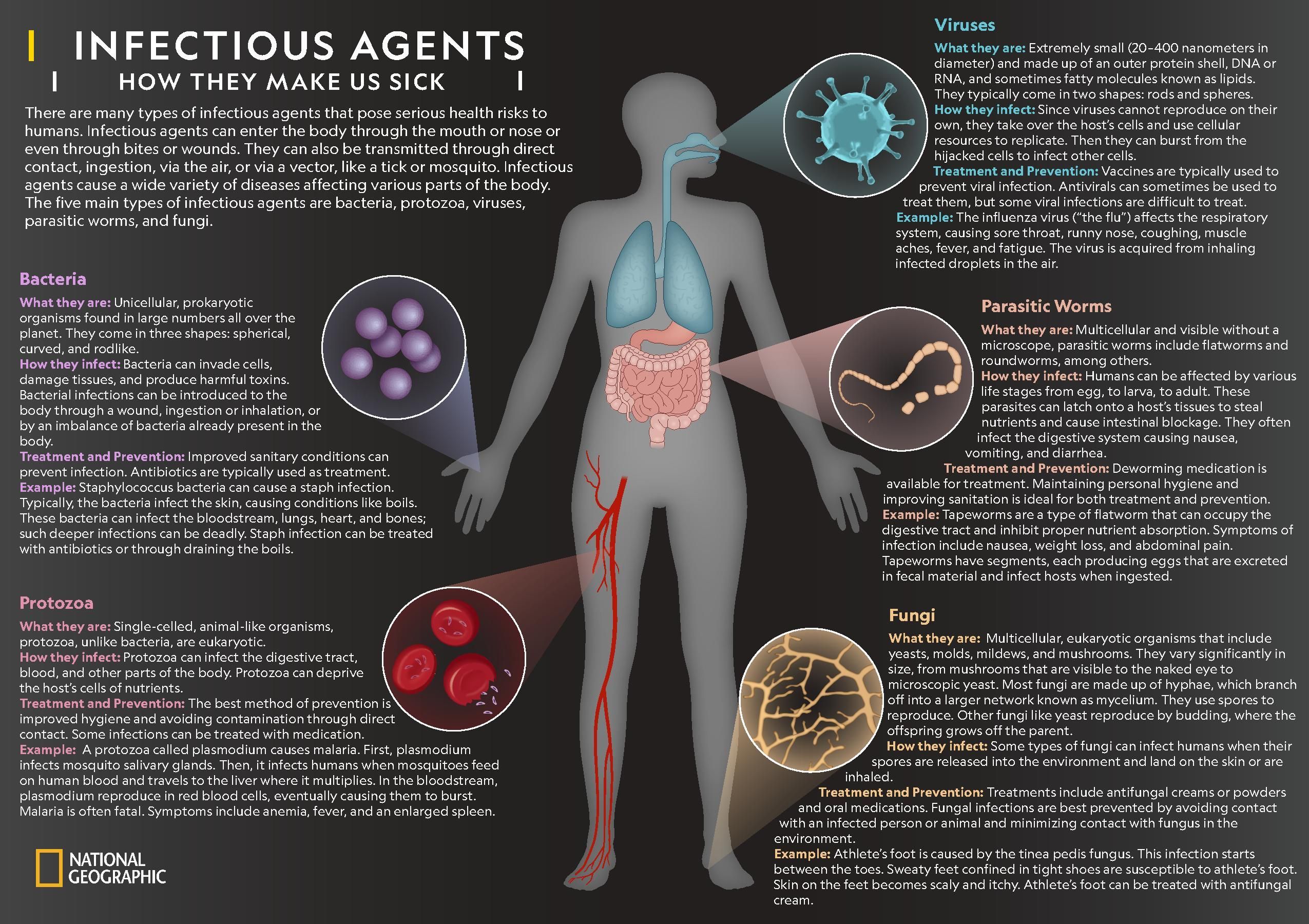
Infectious Agents National Geographic Society



0 Comments